
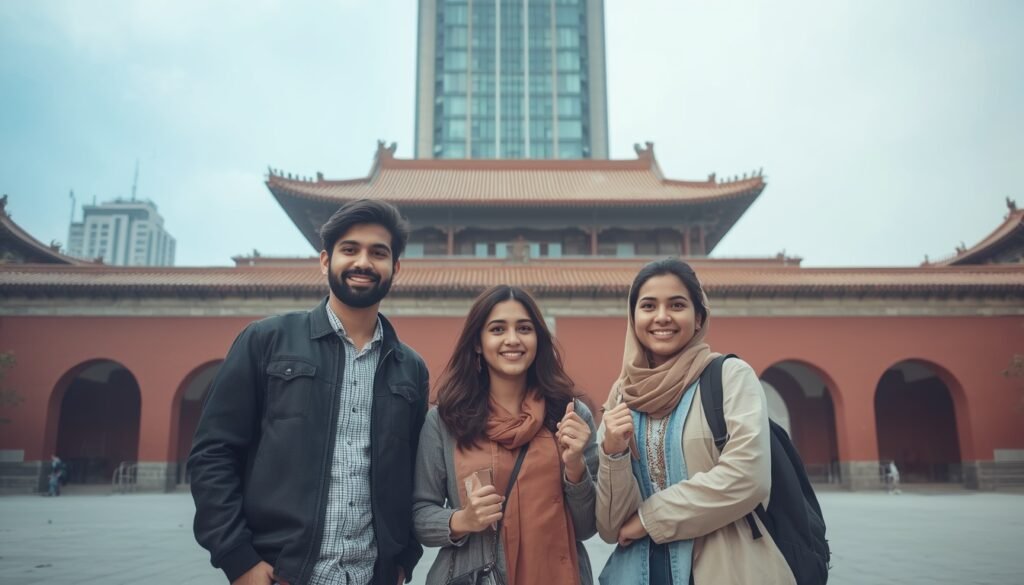
Universities in China for Pakistani Students:
China has become one of the most popular study destinations for Pakistani students, and it is easy to see why. Strong Pakistan–China ties, affordable fees, thousands of government scholarships, and fast-growing universities have made it a real alternative to the UK, Canada, and Australia. Every year, thousands of Pakistani students go to China for engineering, medicine, business, and computer science.
This guide lists the best universities in China for Pakistani students and explains fees, scholarships, and the full admission process so you can apply with confidence for the 2027 intake.
Key Takeaways
- China offers low fees, thousands of CSC scholarships and strong engineering and medical programs.
- Most English-taught programs accept IELTS alternatives such as an MOI letter or an online interview.
- Apply early: many CSC and university deadlines fall between December and April for September entry.
Why Pakistani Students Choose China
- Affordable tuition. Most universities charge roughly RMB 20,000–40,000 (about PKR 800,000–1.6 million) per year for English-taught programs. Chinese-taught programs are often cheaper.
- Huge scholarship supply. The Chinese Government Scholarship (CSC), provincial scholarships, and university awards fund thousands of Pakistani students every year.
- Strong rankings. Tsinghua and Peking University regularly rank among the top universities in Asia.
- Low living costs. Outside Beijing and Shanghai, students can live comfortably on RMB 2,000–3,000 a month.
- A large Pakistani community, including halal food and student associations on many campuses.
10 Best Universities in China for Pakistani Students
| University | City | Known For | Approx. Tuition (RMB/year) |
| Tsinghua University | Beijing | Engineering, Computer Science, AI | 30,000–40,000 |
| Peking University | Beijing | Business, Economics, Sciences | 26,000–40,000 |
| Zhejiang University | Hangzhou | Engineering, Medicine, Agriculture | 25,000–40,000 |
| Fudan University | Shanghai | Medicine, Economics, International Relations | 23,000–40,000 |
| Shanghai Jiao Tong University | Shanghai | Engineering, Business, Medicine | 24,500–40,000 |
| University of Science and Technology of China | Hefei | Physics, Computer Science, Engineering | 20,000–30,000 |
| Harbin Institute of Technology | Harbin | Aerospace, Mechanical, Civil Engineering | 20,000–28,000 |
| Wuhan University | Wuhan | Remote Sensing, Law, Engineering | 20,000–30,000 |
| Huazhong University of Science and Technology | Wuhan | Medicine, Engineering | 20,000–35,000 |
| Southeast University | Nanjing | Architecture, Civil and Electrical Engineering | 20,000–30,000 |
Fees vary by program and change each year, so confirm current figures on each university’s international admissions page.
Popular Programs for Pakistani Students
- MBBS (English-taught). China is one of the largest destinations for Pakistani medical students. Choose a university on the Chinese Ministry of Education’s approved English-medium MBBS list, and check PMDC recognition before you apply. Our MBBS in China for Pakistani students guide covers this in detail.
- Engineering and computer science. Chinese universities are especially strong in electrical, civil, mechanical, and software engineering.
- Business and economics. Many MBA and international business programs are taught in English.
- Agriculture and environmental sciences. These are popular with CSC scholarship holders from Pakistan.
Admission Requirements
Bachelor’s degree:
- FSc, ICS, or A-Levels with at least 60–70% marks (medicine usually requires 70%+ in pre-medical subjects).
- Age usually under 25 for undergraduate programs.
- An English proficiency certificate or MOI letter for English-taught programs.
- A passport valid for at least one year.
Master’s and PhD:
- A 16-year bachelor’s degree (for a master’s) or a master’s degree (for a PhD).
- Two recommendation letters from professors.
- A study plan or research proposal (800–1,500 words for a master’s, longer for a PhD).
- An acceptance letter from a professor (supervisor), which is strongly recommended for CSC applications.

Common documents: attested degrees and transcripts, passport copy, photograph, the Foreigner Physical Examination Form, and a police character certificate (non-criminal record).
Step-by-Step Admission Process
- Choose your program between September and December. Most intakes start in September, with a few in March.
- Contact professors if you are applying for a master’s or PhD. A supervisor’s acceptance letter makes a big difference.
- Apply online through the university’s international admission portal. Application fees are usually RMB 400–800.
- Apply for scholarships at the same time, whether CSC, provincial, or university awards.
- Receive your admission letter and JW201/JW202 form. This is the visa document issued by the university.
- Apply for an X1 study visa at the Chinese Embassy in Islamabad or a consulate in Karachi or Lahore.
- Register at your university and convert the X1 visa into a residence permit within 30 days of arrival.
CSC and Other Scholarships
The Chinese Government Scholarship (CSC) is the most popular route. A full CSC award usually covers:
- Full tuition fee
- University accommodation
- A monthly stipend, usually around RMB 2,500 for bachelor’s, 3,000 for master’s, and 3,500 for PhD students
- Comprehensive medical insurance
Pakistani students can apply through HEC (Type A, bilateral) or directly through universities (Type B). The Type B route often works better because the university nominates you directly. Read our full Chinese Government Scholarship CSC guide for the application strategy.
Other options include provincial scholarships (Jiangsu, Zhejiang, Beijing), university presidential scholarships, and Belt and Road scholarships.
Living Costs in China
| Expense | Monthly Cost (RMB) |
| On-campus accommodation | 600–1,500 |
| Food | 1,000–1,500 |
| Transport and phone | 150–250 |
| Personal expenses | 300–500 |
Beijing and Shanghai cost more. Cities like Wuhan, Harbin, Nanjing, and Hefei are much cheaper.
Things to Consider Before You Go
- Language. Even in English-taught programs, learning basic Mandarin (HSK 1–3) makes daily life and internships much easier.
- Internet access. Google, WhatsApp, and YouTube need a VPN in China. Plan for this.
- Part-time work. Rules are strict. Students need university and immigration approval before working.
- Degree recognition. For MBBS and professional programs, confirm recognition by PMDC, PEC, or the relevant Pakistani body before enrolling.
Documents Checklist for Chinese University Applications
Chinese universities are strict about paperwork, and a single missing page can delay your file by weeks. Prepare these before you open any portal:
- Passport valid for at least 18 months
- Attested Matric and FSc/ICS (or bachelor’s) degrees and transcripts
- Two recommendation letters from teachers or professors
- A study plan of 800–1,500 words for master’s and PhD applicants
- Foreigner Physical Examination Form completed by a registered doctor
- Police character certificate from your local police station
- An English proficiency proof (IELTS, TOEFL, Duolingo or an MOI letter where accepted)
Scan everything in colour, name files clearly and keep all PDFs under the portal’s size limit. Most Pakistani applicants lose time on the medical form and police certificate, so start those first.
Final Thoughts
Universities in China give Pakistani students world-class education at a fraction of Western costs, and with CSC you can study almost completely free. Start preparing your documents now, reach out to professors early, and apply to several universities along with scholarships. It is one of the most reachable study-abroad routes for Pakistani students today. For more budget options, see our list of the cheapest countries to study abroad for Pakistani students.
Frequently Asked Questions
Is China safe for Pakistani students?
Yes. China is generally considered very safe, with low street crime. Many universities also have active Pakistani student associations to help newcomers settle in.
Is IELTS required for universities in China?
Usually not. Most Chinese universities accept an English proficiency certificate or an MOI letter from your previous institution. Some top universities may ask for IELTS 6.0 or TOEFL.
How much does it cost to study in China from Pakistan?
Without a scholarship, expect roughly RMB 20,000–40,000 per year in tuition plus RMB 2,000–3,500 per month in living costs, depending on the city.
When do Chinese universities open admissions?
Most open between November and April for the September intake. CSC applications usually close between January and April, depending on the university.
Can I get a job in China after graduation?
Yes, but you need a work permit sponsored by an employer. Graduates from top Chinese universities with a master’s degree often find it easier to qualify.
Is a study plan required for Chinese universities?
Master’s and PhD applicants almost always need one, and it matters a lot for CSC scholarships. Bachelor’s applicants usually submit a shorter personal statement.
Do Chinese degrees get recognized in Pakistan?
Degrees from recognized Chinese universities can be verified by HEC. Medical degrees also need to meet PMDC rules, so check the latest PMDC list before applying for MBBS.



Questions? Ask below