
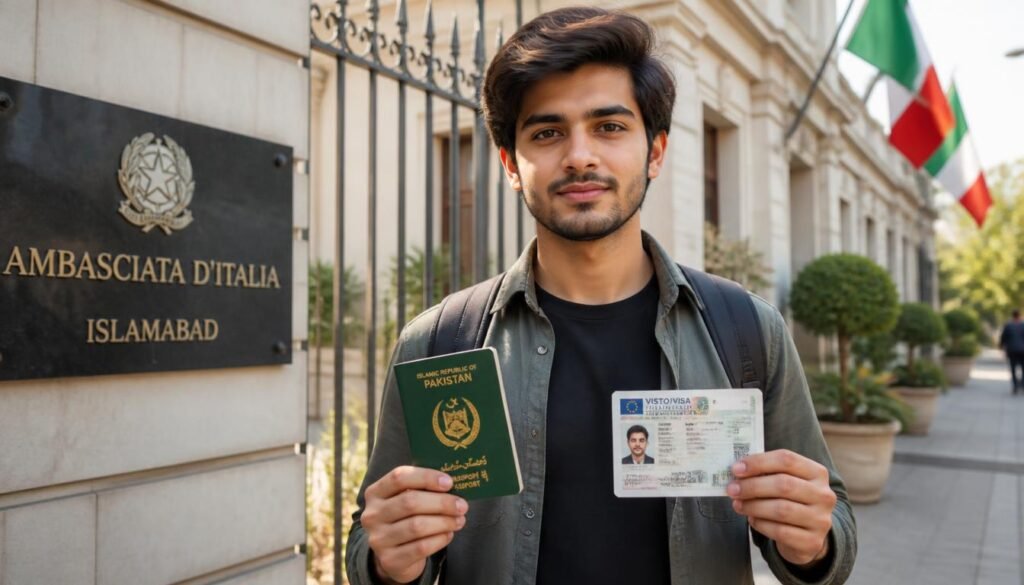
Getting admission to an Italian university is only half the journey. The other half is the Italy study visa, and this is where many Pakistani students lose their intake because of missing documents, a weak bank statement, or late preparation. The rules also became stricter for the 2026–27 academic year, especially around funds.
This guide explains the Italy study visa from Pakistan step by step: who can apply, the documents you need, the new financial requirement, and how to avoid the most common refusal reasons.
Key Takeaways
- You need a Type D national study visa and a completed Universitaly pre-enrollment summary.
- The financial requirement is about €10,180 per year from lawful, traceable funds.
- Book your appointment early — July to September is peak season in Islamabad and Karachi.
What Type of Visa Do You Need?
For a degree program longer than 90 days, you need a National Visa (Type D) for Study. After arriving in Italy, you must apply for a residence permit (permesso di soggiorno) within 8 working days.
Where you apply depends on your permanent residence:
- The Embassy of Italy in Islamabad handles students permanently resident in its consular jurisdiction.
- Students in other areas should confirm their responsible Italian mission (for example, the Consulate General in Karachi) before applying.
Visa appointments are coordinated through the embassy’s outsourcing partner, BLS International. Once your Universitaly pre-enrollment is validated, you receive your appointment details by email at the address you registered on Universitaly.
Step 1: Admission and Universitaly Pre-Enrollment
Before any visa step, you need:
- An admission letter (conditional or final) from an Italian university
- A pre-enrollment application on the Universitaly portal, which the university must approve and the embassy then validates
Universitaly is compulsory. Without it, you cannot get a study visa appointment. For the 2026–27 intake, the embassy set 30 November as the final date for visa applications, but seats and appointments fill up much earlier, so aim to submit in July or August.
Step 2: Legalize Your Educational Documents
Italian authorities need proof that your Pakistani qualifications are genuine and comparable. Usually this means:
- HEC attestation of your degree and transcripts (for bachelor’s and master’s degrees)
- IBCC attestation of Matric and Intermediate certificates
- Ministry of Foreign Affairs (MOFA) attestation
- A Declaration of Value (DOV) from the embassy or a CIMEA statement of comparability and verification, depending on what your university accepts
Start this early, since attestations and CIMEA can take several weeks. See our guide on HEC degree attestation for study abroad.
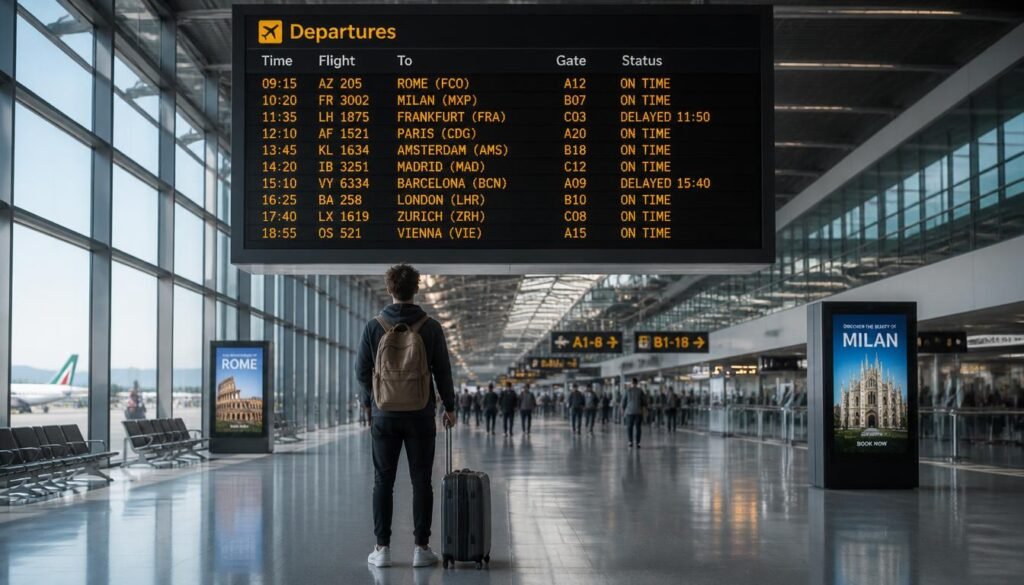
11 Essential Documents for the Italy Study Visa
Based on the embassy’s current checklist, prepare:
- National visa (Type D) application form, completed and signed
- Recent ICAO-standard photograph
- Valid passport with at least 3 months’ validity beyond the visa’s end date, plus copies of previous visas
- Proof of residence in the embassy’s jurisdiction
- Admission letter and Universitaly pre-enrollment summary
- Educational certificates with DOV or CIMEA comparability, plus HEC/IBCC attestations
- Language certificate (English or Italian, as required by your program)
- Motivation letter explaining why you chose this program and university
- Proof of financial means (see below)
- Accommodation proof, such as a booking, a university declaration, or a guarantee letter from a host
- Health insurance with minimum coverage of €30,000, valid throughout the Schengen area
The embassy also asks for a Family Registration Certificate (FRC) issued in English by NADRA, and a flight reservation. The embassy can request more documents at any time.
Step 3: The New Financial Requirement
This is the biggest change for 2026–27. The official minimum is now €10,179.85 per year (about PKR 3.2 million, depending on the exchange rate), up sharply from earlier years.
Key rules:
- Funds should preferably be in the student’s own bank account
- The money must come from lawful and traceable sources. The embassy may ask where large deposits came from
- Family support is allowed, but the relationship and the sponsor’s income should be clearly documented
- A scholarship counts only once it is officially awarded, not just applied for. Eligibility alone is not accepted
Tip: Build your balance gradually over 3–6 months. A sudden large deposit right before the visa appointment is one of the most common red flags.
Step 4: Attend the Visa Appointment
Bring all originals and one set of copies, arranged in the embassy’s checklist order. The officer may ask:
- Why Italy, and why this university?
- What will you study, and how does it connect to your previous degree?
- Who is paying for your studies?
- What are your plans after graduation?
Answer honestly and confidently. If you were admitted without IELTS, expect your spoken English to be judged here. Read our study in Italy without IELTS guide for preparation tips.
Processing Time
Processing normally takes a few weeks after your appointment, but it can take longer in peak season (August–October). Apply early so that a delay doesn’t make you miss the start of classes.
Common Refusal Reasons
- Untraceable or recently deposited funds
- Weak link between your previous studies and your new program
- Incomplete or unlegalized educational documents
- A generic, copied motivation letter
- Signs that the main purpose isn’t study (for example, long unexplained study gaps with no clear plan)
After You Get the Visa
- Travel before your visa’s start deadline and register with your university
- Apply for the permesso di soggiorno at the post office (Poste Italiane kit) within 8 working days
- Get your codice fiscale (tax code) and register for health coverage
- Apply for or confirm your DSU scholarship. See scholarships in Italy for Pakistani students
Visa Interview Questions to Prepare For
Not every applicant is interviewed in detail, but you should be ready for questions such as:
- Why did you choose this university and program instead of one in Pakistan?
- How does this degree connect to your previous studies?
- Who is sponsoring you, and what is their source of income?
- Where will you live during your first month in Italy?
- What do you plan to do after graduation?
Keep your answers short and consistent with your motivation letter and bank documents. If a sponsor is paying, know their job, income and relationship to you. Any mismatch between what you say and what your file shows is a common reason for refusal.
Final Thoughts
The Italy study visa from Pakistan is very achievable if you prepare early and follow the checklist exactly. Focus on three things: a validated Universitaly application, fully legalized documents, and a clean, traceable bank statement of at least €10,180. Get those right, and your visa appointment becomes a formality instead of a gamble. Still choosing a university? Start with our list of the best universities in Italy for Pakistani students.
Visa rules change often. Always check the latest checklist on the Italian embassy’s official website before your appointment.
Frequently Asked Questions
How much bank balance is required for an Italy student visa from Pakistan?
For the 2026–27 and 2027–28 academic years, the minimum is €10,179.85 per year, preferably held in the student’s own account from traceable sources.
Is Universitaly mandatory for an Italy study visa?
Yes. Pre-enrollment on Universitaly is compulsory for non-EU students, and embassy validation is needed before you get a visa appointment.
How long does an Italy study visa take from Pakistan?
Usually a few weeks after the appointment, but it can take longer from August to October. Apply as early as possible.
Do I need IELTS for an Italy study visa?
Not always. If the university accepted an MOI letter, the embassy usually follows that, but it can judge your English during the interview.
What is the last date to apply for an Italy study visa for 2026–27?
The embassy set 30 November 2026 as the deadline, but you should apply much earlier to arrive before classes begin.
Can I apply for an Italy study visa without Universitaly?
No. Universitaly pre-enrollment is compulsory for non-EU students, and the embassy uses it to process your visa.
Do I need a permesso di soggiorno after arriving?
Yes. Within eight working days of arrival you must apply for the residence permit using the post office kit.



1 comment