
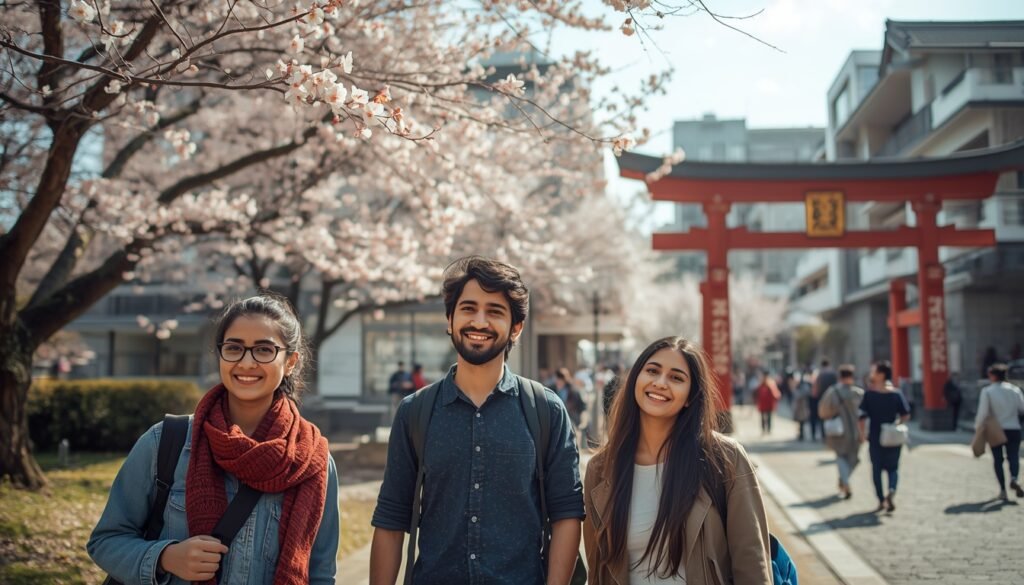
Universities in Japan for Indian Students:
Japan combines world-class technology, safety, and a unique culture, and it’s increasingly welcoming to international students. With a shrinking workforce, Japanese companies actively hire foreign graduates in engineering, IT, and research. For Indian students, Japan offers affordable national universities, English-taught degree programs, and one of the world’s best fully funded scholarships: MEXT.
Here are the best universities in Japan for Indian students, costs, scholarships, and how to apply for 2027.
Key Takeaways
- Japan has many English-taught degrees, especially at graduate level.
- MEXT is the main fully funded scholarship, usually opening in spring through the embassy.
- Students can usually work up to 28 hours per week with permission.
Why Indian Students Choose Japan
- Affordable national universities: standard tuition is about ¥535,800 per year (roughly ₹3 lakh), much cheaper than the USA or UK
- English-taught programs: many universities offer full degrees in English, especially at graduate level
- MEXT scholarship: covers tuition, a monthly stipend, and airfare
- Job market: Japan is actively recruiting foreign IT and engineering talent
- Safety and quality of life: one of the safest countries in the world
10 Best Universities in Japan for Indian Students
| University | City | Known For | English Programs |
| University of Tokyo | Tokyo | Engineering, Sciences, Economics | PEAK (undergrad), many graduate programs |
| Kyoto University | Kyoto | Sciences, Engineering, Agriculture | Kyoto iUP (undergrad), graduate programs |
| Osaka University | Osaka | Engineering, Medicine, Human Sciences | Chemistry-Biology, Human Sciences, graduate programs |
| Tohoku University | Sendai | Materials Science, Engineering | FGL programs, graduate programs |
| Institute of Science Tokyo (formerly Tokyo Tech) | Tokyo | Engineering, Technology | Global Scientists and Engineers, graduate programs |
| Nagoya University | Nagoya | Automotive Engineering, Sciences | G30 programs |
| Kyushu University | Fukuoka | Engineering, Agriculture | International undergrad and graduate programs |
| Hokkaido University | Sapporo | Agriculture, Environmental Science | Modern Japanese Studies, ISP graduate programs |
| Waseda University | Tokyo | Business, Engineering, Politics | SILS and many English programs |
| Keio University | Tokyo | Business, Economics, Engineering | PEARL, GIGA programs |
Other good options include Ritsumeikan Asia Pacific University (APU), Sophia University, and International Christian University (ICU), which offer many English-taught programs.
Cost of Studying in Japan
| Expense | Approx. Cost |
| National university tuition | ¥535,800 per year |
| Admission fee (national) | ¥282,000 (one-time) |
| Private university tuition | ¥800,000 – ¥1,500,000 per year |
| Living costs (Tokyo) | ¥120,000 – ¥160,000 per month |
| Living costs (other cities) | ¥80,000 – ¥120,000 per month |
Many universities offer tuition reductions (50–100%) to international students with good grades and financial need.
MEXT Scholarship for Indian Students
The Japanese Government (MEXT) Scholarship typically covers:
- Full tuition and admission fees
- A monthly stipend (for example around ¥144,000 for research students, depending on level)
- A round-trip airfare
Routes: 1. Embassy recommendation: apply through the Embassy of Japan in India (usually around April–May for the following year) 2. University recommendation: apply directly through a Japanese university that offers MEXT slots
Read our detailed MEXT scholarship guide. The process is very similar for Indian applicants.
Admission Requirements
Undergraduate (English programs):
- 12th-grade results (often 12 years of schooling, and some programs may require SAT or subject tests)
- IELTS 6.0–6.5 or TOEFL iBT 80–100
- Essays, recommendation letters, and interviews
Graduate (master’s/PhD):
- A bachelor’s degree for a master’s (a 16-year education is preferred, though some accept three-year degrees plus a master’s)
- A research plan and contact with a supervisor (professor) in many cases
- IELTS/TOEFL for English programs, or JLPT for Japanese programs
Many graduate students first enroll as research students (kenkyusei) for 6–12 months before entering a formal master’s program.

Student Visa Process
- Receive admission from a Japanese university
- The university applies for your Certificate of Eligibility (COE) with Japanese immigration
- You receive the COE (usually in 1–3 months)
- Apply for a student visa at the Japanese embassy or consulate in India with your COE, passport, and photos
- Travel to Japan and receive your residence card at the airport
Part-Time Work
With permission (“permission to engage in activity other than that permitted”), students can work up to 28 hours per week during term and up to 40 hours per week during long vacations. Many students work in convenience stores, restaurants, and English teaching.
Careers After Graduation
- Graduates can switch to a work visa (“Engineer/Specialist in Humanities/International Services”) after getting a job
- Graduates can also stay for up to one year on a job-hunting visa
- Demand is strong in IT, engineering, AI, semiconductors, and manufacturing
- Japanese language (JLPT N2 or higher) greatly improves job prospects
Japanese Language Levels Explained
The Japanese Language Proficiency Test (JLPT) has five levels:
- N5–N4: basic daily conversation, enough for simple part-time jobs
- N3: intermediate, which helps with most daily life and some jobs
- N2: business level, which many Japanese companies expect for full-time roles
- N1: advanced, near-native professional Japanese
Many Indian students reach N3–N2 during a two-year master’s with consistent study, which significantly improves job prospects.
Best Cities for Students in Japan
- Tokyo: the most jobs and universities, but the highest costs
- Osaka and Kyoto: a lively culture and top universities, and cheaper than Tokyo
- Nagoya: an automotive hub (Toyota)
- Fukuoka: affordable, friendly, and startup-focused
- Sendai: home to Tohoku University and lower living costs
Tips for Indian Students
- Learn Japanese early. Even basic Japanese helps in daily life and interviews.
- Contact professors for graduate programs. It’s often the key to admission and MEXT.
- Apply for tuition reductions and JASSO scholarships after enrollment.
- Consider cities beyond Tokyo (Sendai, Fukuoka, Nagoya) for lower costs.
Certificate of Eligibility (COE) Explained
Before you get a Japanese student visa, your university applies for a Certificate of Eligibility on your behalf. Here is how it works:
- You submit documents and financial proof to the university
- The university files the COE application with Japanese immigration
- Processing usually takes one to three months
- Once issued, you take the COE to the Japanese embassy or consulate in India for your visa
Because the COE takes time, apply to universities early and respond quickly when the admissions office asks for documents. Delays in this stage are the main reason students miss their intake.
Final Thoughts
Universities in Japan offer Indian students affordable, high-quality education in a safe, high-tech society, and MEXT makes it possible to study completely free. Start preparing your research plan, contact professors, and apply for MEXT through the embassy or university routes. If you’re comparing Asian destinations, also see universities in South Korea and our list of fully funded scholarships for Indian students.
Frequently Asked Questions
Is Japan good for Indian students?
Yes. Japan offers affordable national universities, English-taught programs, the MEXT scholarship, and a strong job market for engineers and IT professionals.
How much does it cost to study in Japan from India?
National universities charge about ¥535,800 per year in tuition, plus living costs of ¥80,000–¥160,000 per month depending on the city.
Is Japanese language required to study in Japan?
Not for English-taught programs, but Japanese helps greatly for daily life, part-time jobs, and careers.
Can Indian students work in Japan?
Yes. With permission, students can work up to 28 hours per week during term and up to 40 hours per week in long vacations.
When does MEXT open for Indian students?
The embassy recommendation route usually opens around April–May for the following academic year. Check the Embassy of Japan in India website.
Do Japanese universities accept 3-year Indian degrees?
Many graduate programs accept them, but some require a 4-year degree. Check the program’s eligibility rules.
Is Japan expensive for Indian students?
Tokyo is expensive, but tuition at national universities is moderate and cities like Fukuoka, Sendai and Nagoya are more affordable.


Questions? Ask below